The Caravan That Moved Gold
The caravan that moved the price of gold
The Caravan That Moved Gold
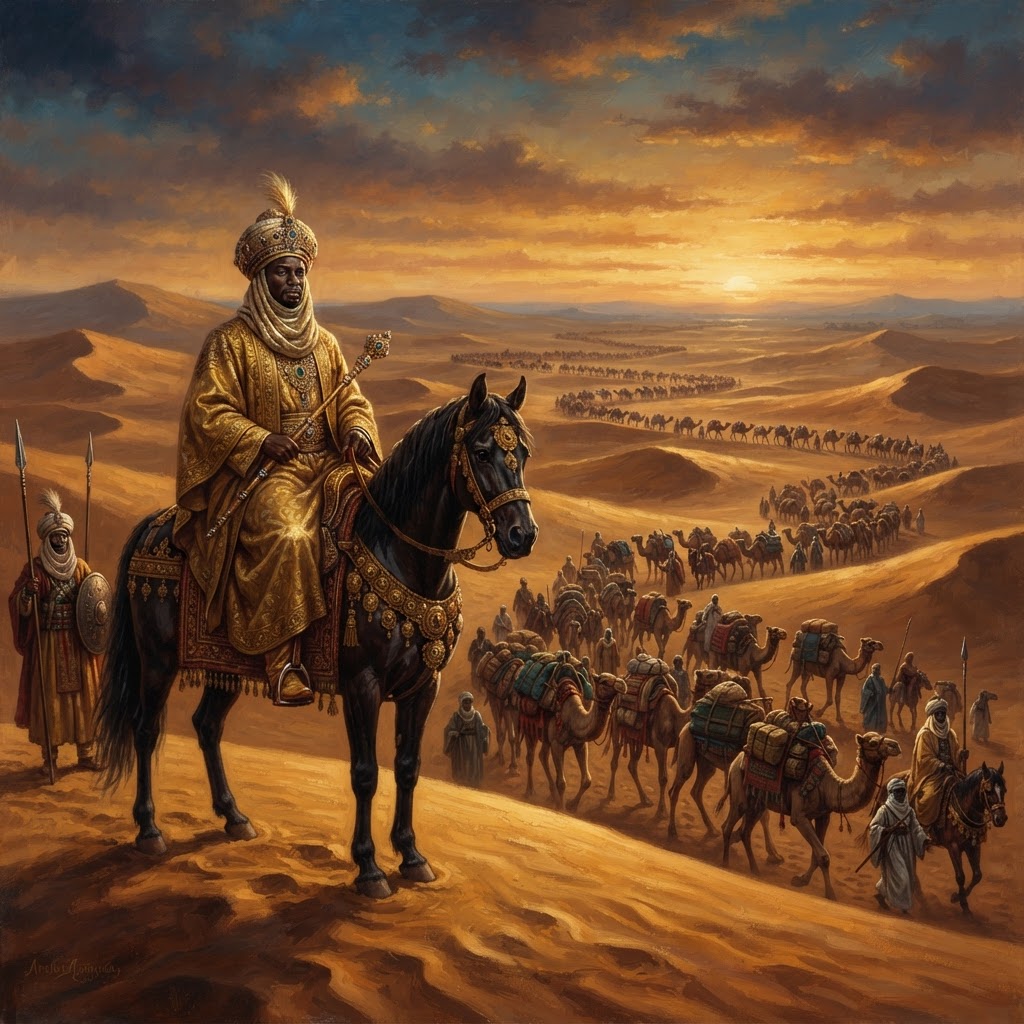
In 1324, Mansa Musa, ruler of the Mali Empire in West Africa, set out on the hajj, the pilgrimage to Mecca. The route crossed the Sahara and passed through Cairo, one of the wealthiest cities of its age. Contemporary chronicles describe a caravan of thousands: soldiers, heralds, officials, and camels carrying gold dust. Modern historians treat the largest figures as the exaggerations of amazed chroniclers, but every account agrees on the essentials. This was one of the wealthiest travelers the world had ever seen, and he did not travel quietly.
In Cairo, the caravan changed the market. The gold handed out as gifts and charity was so abundant that the value of gold in Egypt fell, and the scholar al Umari recorded that the depreciation lasted for years. An empire many in the Mediterranean world had barely heard of announced itself through the price of gold.
Musa returned with ideas and people as well as prestige. The scholar and architect Abu Ishaq al Sahili came with him, and buildings in the Sudano Sahelian tradition, including the Djinguereber mosque in Timbuktu, carry that influence. Under Mali, Timbuktu grew into a center of scholarship and manuscript culture whose collections are still being preserved and studied today.
This render follows the story in three movements: the dawn departure from Niani, the caravan crossing the dunes, and the arrival in Cairo.
Sources and records
- The chronicles of al Umari and other fourteenth century Arab historians
- Published accounts of the Mali Empire and the Cairo gold market
- Records of the Djinguereber mosque and Timbuktu manuscript collections
Sources and original records
Theories & Discussion(0)
No theories yet. Be the first to call the ending.